Mark Le Brocq held a choral scholarship at St. Catherine’s College, Cambridge where he read English. He studied at the Royal Academy of Music with Kenneth Bowen and later continued at the National Opera Studio where he was sponsored by The Friends of English National Opera. Upon completing his studies, he became a Company Principal with English National Opera where roles include Tamino The Magic Flute; Paris King Priam; Count Almaviva The Barber of Seville; Narraboth Salome; Cassio Otello; Don Ottavio Don Giovanni; Don Basilio Figaro and Doctor Maxwell The Silver Tassie.
Most recent and future engagements include Aschenbach Death in Venice (Welsh National Opera, winner of Achievement in Opera at the 2024 UK Theatre Awards and the Sky Arts Award for Opera), Loge Das Rheingold, Mazal The Excursions of Mr Broucek and Melot/Sailor Tristan und Isolde (Grange Park Opera), UK premiere of Houston Chamberlain Wahnfried, Siegmund Die Walküre and Loge (Longborough Festival Opera), Melot (Scottish Opera), Vitek The Makropolos Affair (WNO /Brno Festival/Scottish Opera), Tinca (Tabarro) and Gherardo (Gianni Schicchi) for WNO and World premieres of Blackford's Babel (Camden Choir) and Fennessy's The Riot Act (RSNO).
Further appearances include Siegfried Götterdämmerung (Grimeborn Festival),Mephistopheles Dr Faustus, The Jailer Il Prigioniero (Semperoper Dresden); The Major Figaro gets a divorce (Magdeburg); Painter/Client Lulu (Bolzano), Scrooge A Christmas Carol (Trento); Luka From the House of the Dead (Brno Festival); Loge Das Rheingold (Longborough Opera and Tianjin Symphony Orchestra); Title role Biedermann und die Brandstifter, The Governor Simplicius Simplicissimus (Independent Opera); Sir Philip Wingrave Owen Wingrave (Opéra de Nancy); For WNO his numerous roles include Golitsyn Khovanshchina, Pierre War and Peace, Bassanio Merchant of Venice, Aron Moses und Aron, Scrooge A Christmas Carol, Sergeant Snell In Parenthesis, the Painter/Client Lulu, Le Medecin La chute de la maison Usher, Smee Peter Pan, Dhahab/Overseer Al Wasl WNO/Dubai. For Scottish Opera: Harry King Anthropocene (world premiere), Mao Nixon in China; For Opera North: Siegmund, Froh Der Ring des Nibelungen, Bob Boles Peter Grimes, Steuermann Der Fliegende Hollander, Shapkin House of the Dead, Witch Hänsel und Gretel, Eliates Croesus, the World Premieres of The Pied Piper, Cautionary Tales and Beached, Weinberg’s The Portrait and a staged St Nicolas, Vitek The Makropulos Case (Edinburgh Festival and Opera North), Title role Idomeneo (Northern Ireland Opera); Dr Caius Falstaff (Grange Park Opera); Belmonte Die Entführung Aus Dem Serail (Garsington Opera); The Fairy Queen (Aix Festival and Liceu, Barcelona); Handel’s La Resurrezione and title role Il Ritorno d’Ulisse in Patria (Chicago Opera Theater); Oebalus Apollo et Hyancinthus (Opera Theatre Company and the Classical Opera Company), Agenore Il Re Pastore and title roles Mitridate and Lucio Silla (Classical Opera Company), Kurt Weill’s Seven Deadly Sins for the Royal Ballet, Covent Garden and Monostatos Die Zauberflöte (Opera Holland Park). Mark has worked with Tim Albery, David Alden, Tom Cairns, David Freeman, John Fulljames, Richard Jones, Nikolaus Lehnhoff, Jonathan Miller, David Pountney, Graham Vick, Keith Warner and Francesca Zambello.
On the concert platform Mark has appeared throughout the world. Performances include Sylvester The Silver Tassie, Young sailor Tristan und Isolde, Howard Boucher Dead Man Walking and Goldschmidt’s Mediterranean Songs with the BBC Symphony Orchestra; The Fairy Queen, Dixit Dominus at the BBC Proms; The Eternal Gospel Janacek and A survivor from Warsaw Schoenberg for Porto Casa da Musica; Das Lied von der Erde Orquestra de Extremadura; The Dream of Gerontius RTE Dublin. B Minor Mass with the Israel Camerata; St Matthew Passion Academy of Ancient Music; Beethoven Missa Solemnis, Parry Invocation to music, Three Choirs’ Festival. Berlioz’s Grande Messe de Morts in St Paul’s Cathedral; Mozart’s C Minor Mass with the Scottish Chamber Orchestra; Carmina Burana with the Ulster Orchestra, the Royal Liverpool Philharmonic Orchestra and at the Royal Albert Hall; Messiah in Lucerne with Collegium Instrumentale Brugense; Christmas Oratorio at Cadogan Hall; St Matthew Passion at Symphony Hall with the English Chamber Orchestra and Mozart Requiem with the Madrid Radio Symphony. Further concert engagements include Die Zauberflöte at the Lucerne Festival; La Resurrezione, Solomon, The Creation, St Matthew Passion and The Fairy Queen with the Gabrieli Consort; Mozart’s Requiem with the English Concert in Salzburg and for the BBC Proms; Beethoven’s Mass in C and Choral Fantasia at the Queen Elizabeth Hall; Schubert’s Mass in E Flat with the BBC Symphony Orchestra; Britten’s Serenade with Ballet Rambert; The Diary of One who Disappeared at the Nuremberg International Festival. Conductors include Jiri Belohlavek, Paul Daniel, Richard Farnes, Jane Glover, Daniel Harding, Nicholas Kraemer, Sir Charles Mackerras, David Parry, Trevor Pinnock and Donald Runnicles.
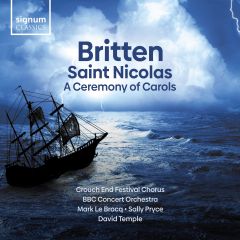
Recordings include St Nicolas BBC Concert Orchestra/David Temple; Messiah Northern Sinfonia/Jane Glover; Valete in Pace Britten Sinfonia/Andrew Parrott; Tristan und Isolde (Young Sailor) Donald Runnicles/BBC Symphony; Pang Turandot and Remendado Carmen for Chandos; Samson, Messiah, Saul and Judas Maccabeus in live recordings from the Maulbronn Festival; Purcell’s Hail Bright Cecilia with the Gabrieli Consort/Paul McCreesh for DG; Handel’s Te Deum, Boyce’s I Was Glad with the Choir of St Paul’s Cathedral/John Scott for Hyperion and Offenbach’s Vert-Vert for Opera Rara.
Mark Le Brocq is vocally expressive
The Guardian (July 2026)
Completing the central trio, Mark Le Brocq brought a pale and incisive tenor to Loge; as a demi-god, no white finery for him, but a black smock with fiery hair and the kind of spectacles that scream of small print and morally questionable decisions. Le Brocq’s voice is not huge, but the role is wordy and Le Brocq brought a sense of narrative to his phrasing that suited the character.
Bachtrack (July 2026)
Mark Le Brocq’s splendid incarnation of this untethered ‘classless’ character.
Classical Source (July 2026)
As the wily Loge, Mark Le Brocq, brings something of his Longborough Festival characterisation with a twitching hand, but his ease of movement and vocal projection is perfectly poised, especially convincing in his ambivalence of a demi-God.
Opera Today (July 2026)
Loge often steals the show in Rheingold for his acting; here too, in splendid costume and coiffure, Mark Le Brocq sang well, whilst scribbling notes on the proceedings in his little red book.
Seen and Heard (July 2026)
The ENO’s strong cast includes Rosie Aldrich, Kenneth Kellogg and Mark Le Brocq as Begbick, Moses and Fatty, the founders of Mahagonny. Simon O’Neill as the lumberjack Jimmy MacIntyre and others also sing excellently.
The Article (February 2026)
...sparks magnificently against Mark Le Brocq's Fatty the Bookkeepers' all blazing tenor and New Jersey-accented chaos.
Scene Mag (February 2026)
Other excellent contributions from Kenneth Kellogg (Trinity Moses), Mark Le Brocq (Fatty the Bookkeeper)...
Standard (February 2026)
Kenneth Kellogg and Mark Le Brocq do well as her miscreant associates, Trinity Moses and Fatty the Bookkeeper.
The Stage (February 2026)
From the very start, however, the strength of the cast shines through, with the trio of fugitives and quartet of Alaskans all working well together. Rosie Aldridge is quite a formidable Begbick and Mark Le Brocq an astutely observed Fatty
Opera Online (February 2026)
...and Mark Le Brocq, all offered individual performances founded on the text and on a recognition that the text has contradictions of its own, not least between words and music.
Seen and Heard (February 2026)
The minor roles in Albert Herring are no less convincingly played. Mr Upfold, the Mayor in a tweed suit and maroon bow tie, is played by tenor Mark Le Brocq, his punchy tenor exploding into outbursts of pomposity.
London Unattached (October 2025)
Marc Le Brocq persuades as the pompous Mayor Mr Upfold, who turns in a glorious patter song praising the wisdom of Lady Billows
Opera Today (October 2025)
Mark Le Brocq had great fun with Mr Upfold's prosy nature, always keen to overdo things. I particularly liked Le Brocq's gloriously over the top account of Mr Upfold's contribution to the Act Three threnody.
Planet Hugill (October 2025)
There was also a spivvy mayor selling black market silk stockings from Mark Le Brocq who sang and acted impressively once again.
Seen and Heard (October 2025)
But belly laughs are not what Britten was going for: as ever, he was more interested in hypocritical humanity, and his chequered cast give finely drawn performances across the board – from Mark Le Brocq’s mayor, doing a clandestine trade in silk stockings...
Guardian (October 2025)
From among the ensemble cast there are a wealth of excellent performances, ranging from Mark Le Brocq’s comically upstanding Mr Upfold...
Opera Online (October 2025)
Her underlings (as she would see them) were given equally well-defined interpretations by a sterling ensemble of Carolyn Dobbin, Aoife Miskelly, Eddie Wade, Andri Björn Róbertsson and, as the village butcher, Welsh National Opera's Aschenbach, Mark Le Brocq
Opera with Opera News (January 2026)
What the production did was form a superb setting for Mark Le Brocq's marvellously communicative Grimes. Having heard him as Aschenbach in Death in Venice with WNO last year [see my review] it was wonderful to get to hear him exploring a role from the other end of Britten's career. For 'The Great Bear' sequence in Act One and the Mad Scene in Act Three, Le Brocq found a magical head voice that seduced in just the right way, conveying the mystical sense that is part of Grimes. But there is also a dramatic edge to Le Brocq's voice, bringing out Grimes' anger and frustration.
This was not a soft-edged, sympathetic performance, in many ways Le Brocq's Grimes was not likeable, but we completely understood and by the end we sympathised.
Planet Hugill (July 2025)
...a monumental Grimes from Le Brocq.
Critics Circle (July 2025)
...led by Mark Le Brocq, an experienced Britten tenor whose Aschenbach in Death in Venice for Welsh National Opera last year won plaudits all round. He was equally impressive here, a craggy loner whohad clearly been stigmatized by his fellows for years. Angry, sad and repressed, this Grimes was a ticking timebomb dangerously near the end of his tether. Vocally he brought enormous reserves of power and stamina to the role, mining the text for all it was worth and landing the top notes whether singing at full throttle or sotto voce.
Musical America (July 2025)
The deluded fervour first of the Wagnerites and then of Mark Le Brocq’s Chamberlain – simply a tour de force – is monstrous.
The Guardian (May 2025)
But the looming Wagner is not Wahnfried’s main character. That’s Houston Stewart Chamberlain, excellently sung by Mark Le Brocq, a bumbling, butterfly-hunting British outsider who becomes an influential insider, welcomed for his horrific antisemitism.
The Times (May 2025)
Marc Le Brocq triumphs in the demanding central role of Houston Stewart Chamberlain, an Englishman who ingratiated himself into the Wagner family. With his frothing anti-Semitism and fanatical belief in German superiority, Chamberlain helped cement the bond between Wagner’s music and Hitler, who appears as a character near the opera’s end, and laid the basis for the family’s Succession-like power struggle that played out for decades.
The Stage (May 2025)
In the central role, Mark Le Brocq – a Chamberlain Doppelgänger – sang tirelessly, his tenor sounding robust.
Bachtrack (May 2024)
Mark Le Brocq brilliantly articulates Chamberlain’s struggling, insecure search for meaning, not unlike one of Britten’s tragic protagonists (carrying over not a little of his masterly realisation of Aschenbach for WNO’s Death in Venice). He delineates every nuance from doubt and hesitation when he’s derided by the Wagnerians as a curious, priggish Englishman on a working holiday to Germany as an entomologist, to chauvinist certainty once he’s become an adopted German and married one of Wagner’s daughters.
Opera Today (May 2025)
Following memorable performances last year in Welsh National Opera’s Death in Venice and as LFO’s Siegmund, Mark Le Brocq gives a brilliant depiction of Chamberlain as a failing bug-hunter, author of an authoritative tome on anti-Semitism and scientific racism, influencing a young Hitler and becoming known as Hitler’s John the Baptist.
Seen & Heard (May 2025)
Mark Le Brocq provides a brilliant portrayal of this vicious and supercilious man.
The Article (June 2025)
Houston himself (and yes, someone did actually say 'Houston, we have a problem') was a gift of a role for the tenor Mark Le Brocq, who ate it up and belched it out with gusto. Le Brocq was perhaps too sympathetic for the character he played-a two-dimensional piece of theatre demanded something less subtle-but he gave the opera its centre and, for better or worse, its heart.
Opera Magazine (Septembern 2026 )
Mark Le Brocq's impish Loge and then his lyrical Siegmund (a remarkable feat this, as the roles' vocal demands are so very different)...
Opera (June 2024)
Mark Le Brocq is an imposing Siegmund
The Stage (June 2024)
Rarely has the Act II exchange between the Valkyrie, Brünnhilde (the powerful and unflappable Lee Bisset) and the Wälsung twins, Siegmund (Mark Le Brocq, ardent and tender) and Sieglinde (Emma Bell, fearless in vocal strength), felt so intense.
Guardian (June 2024)
Act 1 was the strongest. Mark Le Brocq was a compelling Siegmund, more the rough man of the forest that his backstory describes and less the noble knight errant that is often portrayed, closer in temperament to Hunding than anyone might like to admit. Sparks flew between him and Emma Bell’s dramatically sung Sieglinde.
But Die Walküre is an opera that can spring surprises on you no matter how often you see it. Here, one scene made more impact on me than ever before: Le Brocq’s “So grüße mir Walhall, grüße mir Wotan” when he explains to Lee Bisset’s Brünnhilde – his voice honeyed, his mood one of wistful resignation – that he rejects the delights of Valhalla and its wish-maidens, if Sieglinde cannot be there with him. As Brünnhilde gains the understanding of human love that has previously been alien to her, this was the emotional highlight of the evening.
BachTrack (June 2024)
a very fine Mark Le Brocq
The Article (June 2024)
Mark Le Brocq’s slippery Loge who, with his crimson frockcoat, sunglasses and twirling cane, amuses as much as he unsettles.
Siegmund (a vividly projected Mark Le Brocq)... These transformative episodes are amongst the evening’s most emotionally charged – the developing feelings and knowing glances between Le Brocq and Bell bringing a tour de force of accumulating passion where, musically speaking, stage and pit are in perfect alignment, singers and players working together as a single unified body, with Negus generating sublime music making for some forty minutes, the emotional temperature far into the red.
Opera Today (June 2024)
Marc Le Brocq sang Siegmund with a handsome tenor and excellent control, and he also made a charismatic Loge.
Classical Voice America (June 2024)
Longborough’s demanding rehearsal plans denied Welsh National Opera’s Death in Venice the services of Mark Le Brocq in Birmingham, in the leading role as Gustav von Aschenbach. How good to hear him at Longborough as Loge, a role which gives him the opportunity to use his compelling tenor voice and acting abilities
Seen and Heard (June 2024)
Aschenbach was the final operatic role Britten wrote for his lifelong partner, tenor Peter Pears, and from an artistic point of view it remains one of the most demanding of them all. In essaying it for the first time, Mark Le Brocq shows his mettle physically, as well as vocally, seizing the opportunity to claim his place within a distinguished line of the part’s interpreters.
Doubtless Le Brocq will take it further, but his is already a remarkable assumption at the epicentre of a show that, taken as a whole, reveals the company’s capabilities at their outstanding best.
The Stage (March 2024)
Based on Thomas Mann’s novella, the work makes huge demands on the tenor singing the role of Gustav von Aschenbach – heroically sung here by Mark Le Brocq.
A strong presence throughout, Le Brocq conveys in both deeply sympathetic voice and in body language Aschenbach’s anguish.
Guardian (March 2024)
As Aschenbach, Mark Le Brocq continually commands the stage, more the English gentleman than the feverish writer of the original story, buffeted by the dubious characters from gondolier to hotel manager to barber whom he meets on his travels.
Telegraph (March 2024)
And, at the centre, fine individual performances. Mark Le Brocq is a washed-up Aschenbach who persuasively disintegrates from buttoned-up prude to dishevelled voyeur.
Times (March 2024)
Le Brocq's Aschenbach, tall, lumbering and snatched from a dusty library, sang Britten’s secco recitatives with a cerebral clarity
BachTrack (March 2024)
Mark LeBrocq’s interpretation of the role of Gustav von Eschenbach (much the largest in the opera) was commanding, while being shot through with the character’s self-doubt. He was thoroughly assured in the passages of recitative and Sprechstimme and psychologically convincing at all times – producing a vocally lucid and emotionally coherent account of von Eschenbach’s unrelenting self-awareness and its associated inhibitions; he presented von Eschenbach’s vanity and occasional pomposity with a degree of sympathy, creating a plausibly complex human being.
Seen and Heard (March 2024)
In what is largely a dramatic monologue Mark Le Brocq was vocally splendid and sympathetic to the role Gustav von Aschenbach. It isn’t an easy one but there was plenty of angst, periodic rhapsody balanced with despair and maybe enough self-disgust.
South Wales Argus (March 2024)
He is rarely off stage, and in the WNO’s production Mark Le Brocq was outstanding in this role
The Article (March 2024)
The astute choice of Mark Le Brocq as Aschenbach alone would have carried the show. This versatile and reliable British tenor has taken so many roles of every scale and kind over the years, his gifts may have been taken for granted. Vocally secure throughout (he is rarely off stage), he acts with courageous stillness and nuance, emphasising his character’s inner conflict and frailty.
The Observer (March 2024)
Le Brocq is absolutely exceptional, by the way: one of those anti-virtuosic virtuoso performances where the artist vanishes so completely inside the character that it almost feels tactless to mention the technical niceties – his bleached, aching tone; the way it loosens and ripens as Aschenbach loses his grip, and the exemplary clarity and sensitivity with which Le Brocq articulates the text
The Spectator (March 2024)
Such technical prowess needed to be reflected in the voices of the singers. As Aschenbach, Mark Le Brocq gave a poised performance, expressing the torment first of dried-up inspiration then of the inaccessibility of the figure who might change his fate. The clarity of Le Brocq’s diction and his eloquent control of Britten’s arching phrases were matched by a focused stage presence that was all the more important given the extra distractions elsewhere.
Opera (May 2024)
In the principal role, Mark Le Brocq achieves just the right balance of vanity and vulnerability. Surtitles are provided, but his crystal-clear diction renders them superfluous.
Opera Today (March 2024)
Attention is compelled by Le Brocq’s effortless, fluid delivery of the vocal part, given the naturalness and nuance of speech in what consistently remains a recitative or, at most, an arioso-like setting by Britten, firmly dictated by the latent music and rhythm of the libretto’s words in the words (it’s interesting that Britten kept Aschenbach as a writer, rather than turning him into the Mahler-like composer of Visconti’s film). Like the novels of Henry James (another artistic figure influenced by Venice) where the person of any narrator becomes essentially dissolved in the re-telling of the story itself, so here Le Brocq’s embodiment of Mann’s writer in the opera makes him an effectively passive conduit for the haunting sights and experiences of the Venetian lagoon.
Classical Source (April 2024)
Mark Le Brocq made an excellent Sailor in Act I and later gave a strong portrayal of Tristan’s erstwhile friend, the treacherous Melot.
The Article (June 2023)
Mark Le Brocq is menacingly memorable
Times (June 2023)
and Mark Le Brocq creepily distasteful (in character, not voice) as Melot, the supporting cast has no weakness
Observer (June 2023)
It demands uniform excellence of acting from its eleven singers to draw you into the story and that’s exactly what director Olivia Fuchs gets from her cast, starting from Mark LeBrocq as the solicitor’s clerk, Vitek...
BachTrack
An audience unfamiliar with the opera can be excused for finding it baffling without paying close attention to the surtitles, so it was an excellent idea for Mark Le Brocq to appear stage front during the scene change from Act 1 to 2 to explain the background. Le Brocq himself gave a fine account of Vitek
The Article
Mark le Brocq a flamboyant Vítek
Opera Today
She was joined by Mark Le Brocq as Siegfried, Le Brocq was more lyrical and nuanced and made better use of his words
Seen and Heard
Mark Le Brocq, adding lyricism to power for the maturing man
The Stage
No Siegfried, however foolish, can do both these works a few hours apart, so it was Mark Le Brocq who sailed into the Gibichung plot, singing with sweet tone and sufficient heft, qualities rarely combined in the role
BachTrack
Despite longueurs in Act One, there are some intensely lyrical passages. Mazal, Brouček’s painter tenant (Marc le Brocq) profits from these moments and the act closes in an ecstatic love duet with his girlfriend Malinka (Fflur Wyn).
Quarterly Review
Mark Le Brocq, in one of many roles, excels as a jailed writer with a strong similarity to Vaclav Havel
The Times
Quadrupling up, Mark Le Brocq excels as painter Mazal and in other guises – fearlessly and ardently cresting Janáček’s tenor peaks.
The Stage
A deluxe British cast, shed light on Janáček’s grueling vocal lines and included Mark Le Brocq
The Guardian
Grange Park has done well with its tenors, especially Mark Le Brocq in four ridiculously high roles
Financial Times
The rest of the cast reads like a roll-call of the British operatic establishment, with Mark Le Brocq, Andrew Shore, Clive Bayley, Anne-Marie Owens and Adrian Thompson all revelling in their multiple roles
BachTrack
Grange Park Opera focuses very much on engaging the best singers for their parts, and here the stage was full of them. Mark Le Brocq excelled in several roles, his remarkably flexible tenor ringing out gloriously in diverse characterizations, most notably as the would-be romantic lover Mazal
Music OMH
Mark Le Brocq, in a tenor part liberally sprinkled with top Cs, is heroic as Mazal
Culture Whisper
Mark Le Brocq’s ailing, oily Mao is a compelling sphinx
The Times
There is cast-iron evenness among the key players. Mark Le Brocq finds an unexpected warmth in Mao
The Scotsman
As Mao, Mark Le Brocq masterfully conveyed a sense both of charisma and folly
The Observer
The singing and acting was superb right across the board.Mark le Brocq in splendid voice
BachTrack
This central quartet shine.....Mark le Brocq’s Mao is one of his best role to date, making a strong dramatic impact
Sunday Times
The most satisfying figure, in part because his frequent presence gives us a chance to know him, in part because Mark Le Brocq portrayed him outstandingly, is that of Pierre Bezukhov, rich, socially awkward; a man without purpose yet idealistic, sensitive and questing
Observer (July 2019)
Pierre’s pivotal journey is depicted with a psychological fervour that commands the drama and gives the excellent Mark Le Brocq a role to savour. The imposing tenor gives a terrific performance
Whats on Stage (July 2019)
Pierre Bezhukov, wonderfully portrayed by tenor Mark Le Brocq
The Guardian (July 2019)
And Mark Le Brocq (Pierre) were all excellent, but it was the latter's thoughtfully bookish personality which was the most engaging. His role is small in the first half, but his earnest rage at Anatole showed off his richly coloured voice across a very wide range, and his self-discovery in Act 2 was very convincingly pulled off
BachTrack (July 2019)
There is a definite attempt to keep Pierre at the centre of a narrative arc so it helps that he is incarnated in the night’s most outstanding performance by Mark Le Brocq
Classical Source (July 2019)
Le Brocq, a star of WNO’s recent Russian productions, delivers the goods again as a studied, troubled Pierre
British Theatre Guide (July 2019)
Le Brocq’s stature gives him the physical presence to believably intimidate the scoundrel Anatole yet his physique doesn’t stop him from showing a beautiful vulnerability
British Theatre Guide (July 2019)
Mark Le Brocq offered a superb performance, communicating both strength and vulnerability, phrasing with tenderness but delivering with conviction
Opera Today (July 2019)
Among the cast, Mark Le Brocq’s foppish, sardonic Loge and Mark Stone’s vocally authoritative Alberich stand out, managing to create stage personalities to match the strength of their musical ones
The Guardian
Negus’s cast mostly copes admirably with the challenge. The unquestionable star of the show is Mark Le Brocq’s Loge (pictured below), a kind of fin de siècle Mephistopheles, with frock coat and cane, pirouetting round the stage in a way that openly ridicules the stolid, bewildered, humourless bourgeoisie of mount Valhalla, and even runs rings (non-golden) round the crafty tenants of Nibelheim. He also sings - the most lyrical music in the opera - with elegance and eloquence
The Arts Desk
several outstanding performances. Chief amongst these was Mark Le Brocq’s dodgy dealer Loge, whose crimson frockcoat and twirling cane brought a whiff of a Victorian music hall MC. His ease of movement and vocal projection were outstanding, his perfectly caught ambivalence tailor-made for this ro
Opera Today
his was a performance that was truly of an ‘international’ standard and – amongst the men – Le Brocq (who is next year’s Siegmund) was the singer who truly understood his character the most. He was rarely still and was constantly reacting to what was going on around him and – even with a smirk or some feigned deference – he commanded that the audience’s attention be solely on him whenever he was on stage
Seen and Heard
This leaves the two stars of the show. The tenor Mark Le Brocq was an outstanding Loge in the style of our very own Game of Thrones Lord Varys. In this respect, whilst he was always vocally secure it was his portrayal of the role as the skilled manipulator and commander of informants that stood out
Opera Spy
Both performances set a very high standard, Stone embracing Alberich’s dark soul with total conviction, and Le Brocq giving an elegant, rather camp bite to Loge’s slippery loyalties
Classical Source
Mark Le Brocq’s wry, sardonic Loge, reminiscent of the late Robert Tear’s
The Times
Osud
Osud
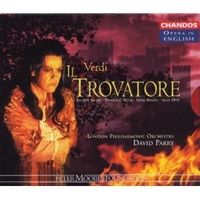
Ruiz - Il Trovatore - Chandos
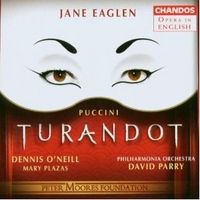
Pang - Turandot - Chandos
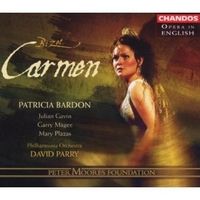
Remendado - Carmen - Chandos
Handel's Messiah
Handel's Saul
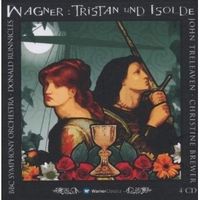
Young Sailor - Tristan und Isolde - Warner Classics
Handel's Joshua
Handel's Judus Maccabeus
Binet - Vert Vert - Opera Rara
Handel's Messiah with Jane Glover
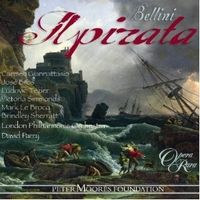
Itulbo - Il Pirata - Opera Rara
Brough – Valete in Pace